What Is Ceramic Coating? How It Protects Your Car’s Paint
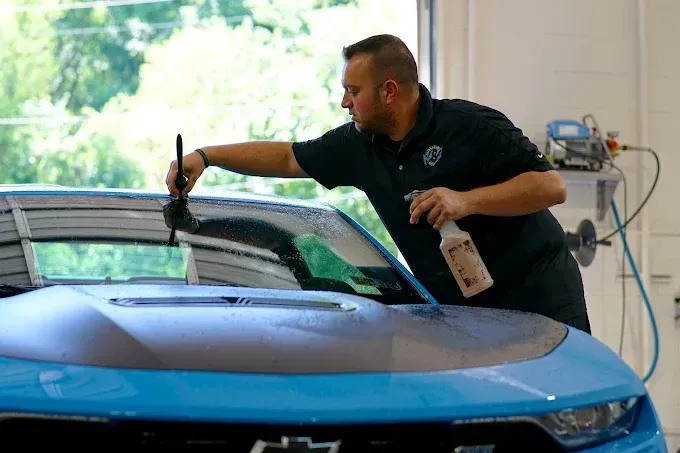
You’ve probably seen the videos. A freshly detailed car rolls out of the bay, someone pours a bucket of muddy water over the hood, and the water beads into tight spheres and slides right off like it never touched the surface. That’s a professional ceramic coating at work. It’s one of the most effective ways to protect your paint, but it has real strengths and real limits worth understanding before you invest. Here’s a clear, jargon-free look at what ceramic coating is, how it works, and whether it fits your vehicle.
What Ceramic Coating Is
Ceramic coating is a liquid polymer built primarily from silicon dioxide, the same compound found in quartz and sand, engineered down to a microscopic scale. When it’s applied and cured, it leaves behind a thin, hardened, glass-like layer bonded to your paint.
Not all coatings are created equal. Consumer spray products are less concentrated and easier to apply, but they also wear away sooner. Professional-grade coatings used in a shop are more concentrated, which produces a thicker, harder, longer-lasting protective layer once cured. Some formulas also blend in additional compounds to boost UV resistance and deepen the visual gloss. Whatever the formula, once the carrier solvents evaporate and the coating cures, what’s left is a bonded protective layer, not a temporary dressing sitting on top of the paint.
How Ceramic Coating Works
Under magnification, your car’s clear coat isn’t smooth. It’s full of microscopic pores and valleys. When a ceramic coating is applied, it flows into those tiny imperfections, and as it cures it links together into a continuous, hardened layer that interlocks with the clear coat beneath it. Unlike a wax, which simply rests on the surface, a ceramic coating bonds at a much deeper level and forms a unified barrier.
This is exactly why preparation matters so much. If swirl marks, embedded dirt, or old product residue are left on the paint, the coating seals those flaws underneath, locking in the very defects you were trying to eliminate. For drivers in Haddonfield and across South Jersey, this is the single biggest reason to choose an experienced installer over a quick DIY job. At our South Jersey shop, we fully decontaminate the paint and perform paint correction before any coating touches the vehicle, so the finish you lock in is the best version of your paint.
Once cured, the coating lowers the paint’s surface energy. In plain terms, contaminants like tree sap, bug splatter, and road grime have a much harder time sticking. They sit on top of the slick surface instead of digging into the clear coat, which makes every wash faster and gentler on your finish.
Protection, Gloss, and Water Repellency

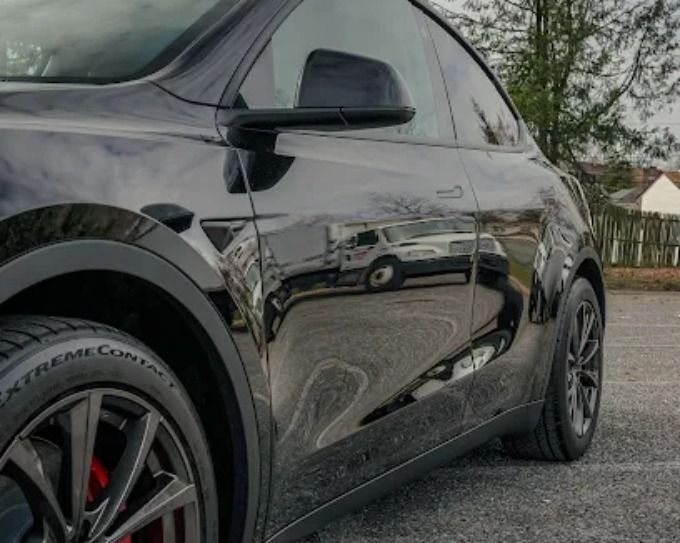
The benefits you notice most come from the coating’s water-repellent surface. Because it’s hydrophobic, water pulls into tight beads and sheets off the panel, carrying loose dirt and grime with it. That’s the beading effect from the videos, and it’s more than a party trick. The less time water and contaminants spend sitting on your paint, the lower the risk of etching, staining, and water spots.
Beyond repelling water, the coating acts as a sacrificial shield against the elements. UV radiation is one of the leading causes of paint fading and oxidation over time, and the coating helps filter it before it reaches the clear coat. Its chemical resistance also means acidic contaminants like bird droppings and acid rain sit on the surface rather than eating into the paint, giving you time to wipe them away before damage sets in.
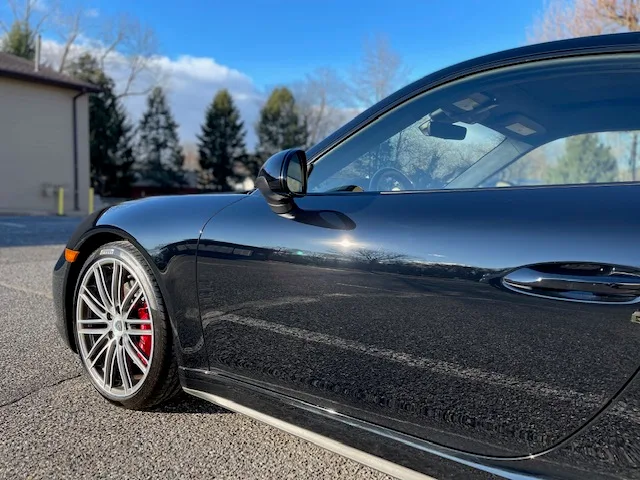
Then there’s the gloss. Because the coating fills microscopic pores and creates an ultra-smooth surface, light reflects more evenly off the paint. The result is a deeper, wetter-looking shine that makes even an older daily driver look showroom-fresh.
At M&G Automotive Detailing, we offer tiered Gtechniq coating packages so you can match the level of protection to your vehicle and how you drive:
- Entry level: a durable base layer of protection, well suited to newer or leased vehicles.
- Mid level: longer-lasting protection with expanded coverage, ideal for daily drivers who want lasting gloss and easier upkeep.
- Top level (Gtechniq Crystal Serum Ultra): our most durable coating with the broadest coverage. We’re one of a select few shops in New Jersey certified to apply it.
What Ceramic Coating Can’t Do
Ceramic coating is powerful, but it isn’t armor. It won’t stop a rock kicked up at highway speed from chipping your paint, and it won’t prevent a deep scratch from a shopping cart, a key, or a careless door in a parking lot. It adds hardness and chemical resistance, but a sharp, focused impact can still reach the clear coat underneath. If physical impact protection is your main concern, paint protection film, a thicker, self-healing film, is the product built for that job, and we install STEK PPF for exactly that purpose.
A coating also doesn’t self-heal, and it doesn’t make washing optional. Dirt, pollen, and road film still build up. You simply need less effort and fewer harsh chemicals to remove them. Where ceramic coating truly shines is in the slow, invisible damage like UV fading, oxidation, water spotting, and chemical etching that quietly wears down unprotected paint. If you’re weighing the trade-offs and wondering whether ceramic coating is worth it for your situation, that’s exactly the conversation our team is happy to have.
The Professional Application Process
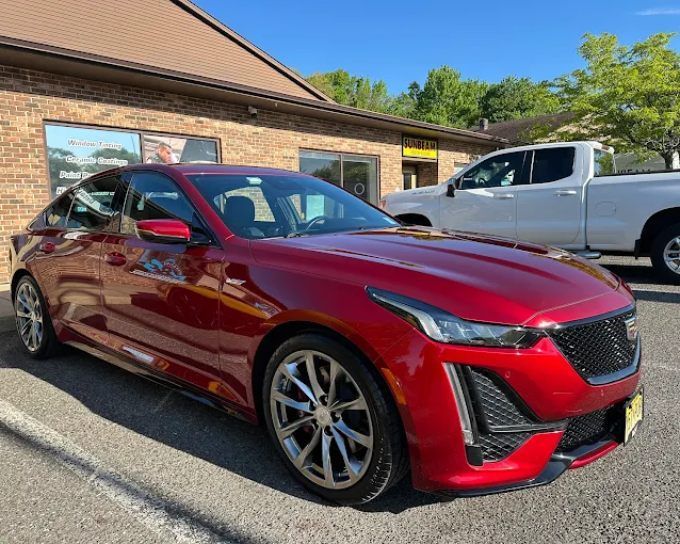
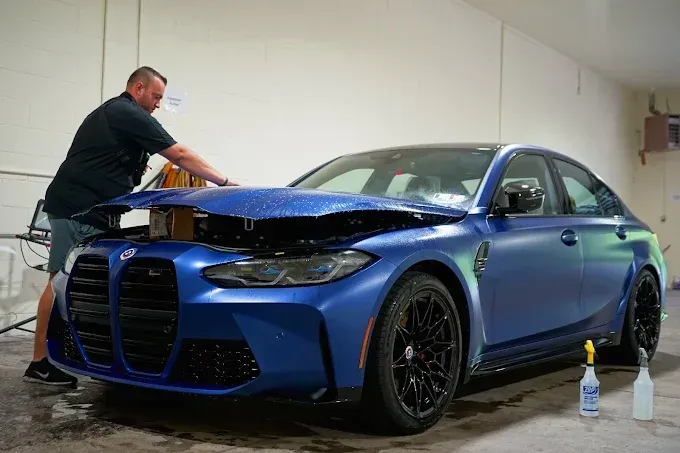
With ceramic coating, preparation, not the product itself, determines whether the finish lasts or fails. Before any coating is applied, the vehicle is thoroughly decontaminated: a careful hand wash, a clay treatment to pull embedded contaminants from the clear coat, and a final prep wipe-down. If the paint shows swirl marks, light scratches, or oxidation, those are corrected first. Coating over imperfections seals them in permanently, and no amount of gloss will hide a flaw trapped beneath a glass-hard layer.
The application itself takes patience and precision. The coating is applied in thin, even passes and worked in small sections, because it begins to cure within minutes. After it’s applied, the vehicle needs to stay dry and sheltered while the coating cures, and professional-grade coatings need additional time to reach full hardness. We build that curing time into our scheduling, so your car stays in a controlled environment until the coating is fully set, never rushed out the door before it’s ready.
Ceramic Coating vs. Traditional Wax
If you’ve waxed your car for years, the cost of a ceramic coating can feel like a leap. Wax is cheap, familiar, and you can apply it in your driveway. The difference comes down to the bond. Here’s how the two compare:
- Bond: Wax rests on top of the surface, while a ceramic coating bonds to the clear coat.
- Durability: Wax wears away relatively quickly, while a ceramic coating is engineered to last far longer.
- Water repellency: Wax offers moderate beading, while a ceramic coating delivers strong, lasting hydrophobic sheeting.
- UV and chemical resistance: Wax provides minimal protection, while a ceramic coating forms a significant barrier.
- Upkeep: Wax needs frequent reapplication, while a ceramic coating needs only periodic gentle washing.
- Removal: Wax wipes or washes off, while a ceramic coating requires polishing to remove.
Wax gives a warm, soft shine that looks lovely on dark paint but tends to dull as it breaks down. A ceramic coating produces a harder, glassier reflection that holds its depth far longer, because the surface itself is smoother at a microscopic level and the paint color reads richer as a result.
Wax still has a role, though, as maintenance. A ceramic-infused spray detailer used between professional washes can top up that slick, water-repellent feel without disturbing the coating underneath. Our Mini Detail service includes a ceramic sealant application designed for exactly that kind of periodic upkeep, and our maintenance plan keeps your coating performing its best between visits so you don’t have to think about scheduling each one.
Is Ceramic Coating Right for Your Vehicle?
If you take pride in your car, plan to keep it for the long haul, and want it to stay cleaner and better protected with less effort, a professional ceramic coating is one of the smartest investments you can make in its appearance and long-term value.
To find the right level of protection for your vehicle and your driving habits,
contact us for a consultation. You can also call us at
(866) 927-4208 or book online.
M&G Automotive Detailing is proud to help South Jersey drivers protect what they’ve worked hard for.
Frequently Asked Questions
What is ceramic coating made of?
It’s a liquid polymer made mainly from silicon dioxide, the same compound found in quartz and sand. Once applied, it cures into a thin, glass-like layer bonded to your car’s clear coat.
How does ceramic coating protect car paint?
It forms a slick, hydrophobic barrier that helps water and grime slide away and makes the paint more resistant to UV exposure and chemical contaminants like bird droppings and acid rain. It makes washing easier and helps guard against the slow damage that fades and dulls unprotected paint.
How long does ceramic coating last?
It depends on the product and how the vehicle is cared for. Consumer-grade products offer shorter-term protection, while professional-grade coatings are designed to last considerably longer. Proper preparation and routine maintenance make a meaningful difference in longevity.
Does ceramic coating prevent scratches and rock chips?
No. It adds chemical and environmental resistance, but it won’t stop a rock chip or a deep scratch. For physical impact protection, paint protection film is the better choice.
How should a car be prepared before ceramic coating?
The paint is washed, decontaminated, and corrected as needed, because a coating can seal existing flaws beneath the finish. After application, the vehicle stays dry and sheltered while the coating cures.